
· chinese culture · 4 min read
How Can Beginner Chinese Learners Study the Dao De Jing(Tao Te Ching)?

Who can study my course “Dao De Jing Recitation”?
You don’t need to be an advanced Chinese learner to study the Dao De Jing — even absolute beginners can dive in! This isn’t a new idea. Over 2,000 years ago, scholar Dong Jizhi already showed us the way.
Why is the Dao De Jing so important?
It’s a classic etched into the heart of Chinese culture—a core part of China’s intellectual DNA. Its influence is like a neural network woven throughout the Chinese language. Even people who’ve never read the Dao De Jing, or who are illiterate, use its expressions in daily life without realizing it.
For example, the most basic phrase in Chinese: “我知道”—which translates to “I know.” Literally, it means “I know the Dao (the Way).”
Beyond street names and maps, the word “Dao” has taken on deeper, abstract meanings rooted in the Dao De Jing.
In my course, I mention that around 200 Chinese proverbs come directly from the Dao De Jing—but there are even more colloquial phrases and sayings inspired by it. We just use them so often that we don’t even notice!
How to study the Dao De Jing?
Step one: Recite it. Read it aloud until it flows naturally, then memorize it.
According to the Rites of Zhou, elementary students in ancient China started with the “Six Arts,” one of which was Shū (书)—reciting classics. Since kids were just learning characters, understanding came later.
As adult learners, we’re not so different from those kids when facing profound texts like the Dao De Jing. So why not use the same time-tested method?
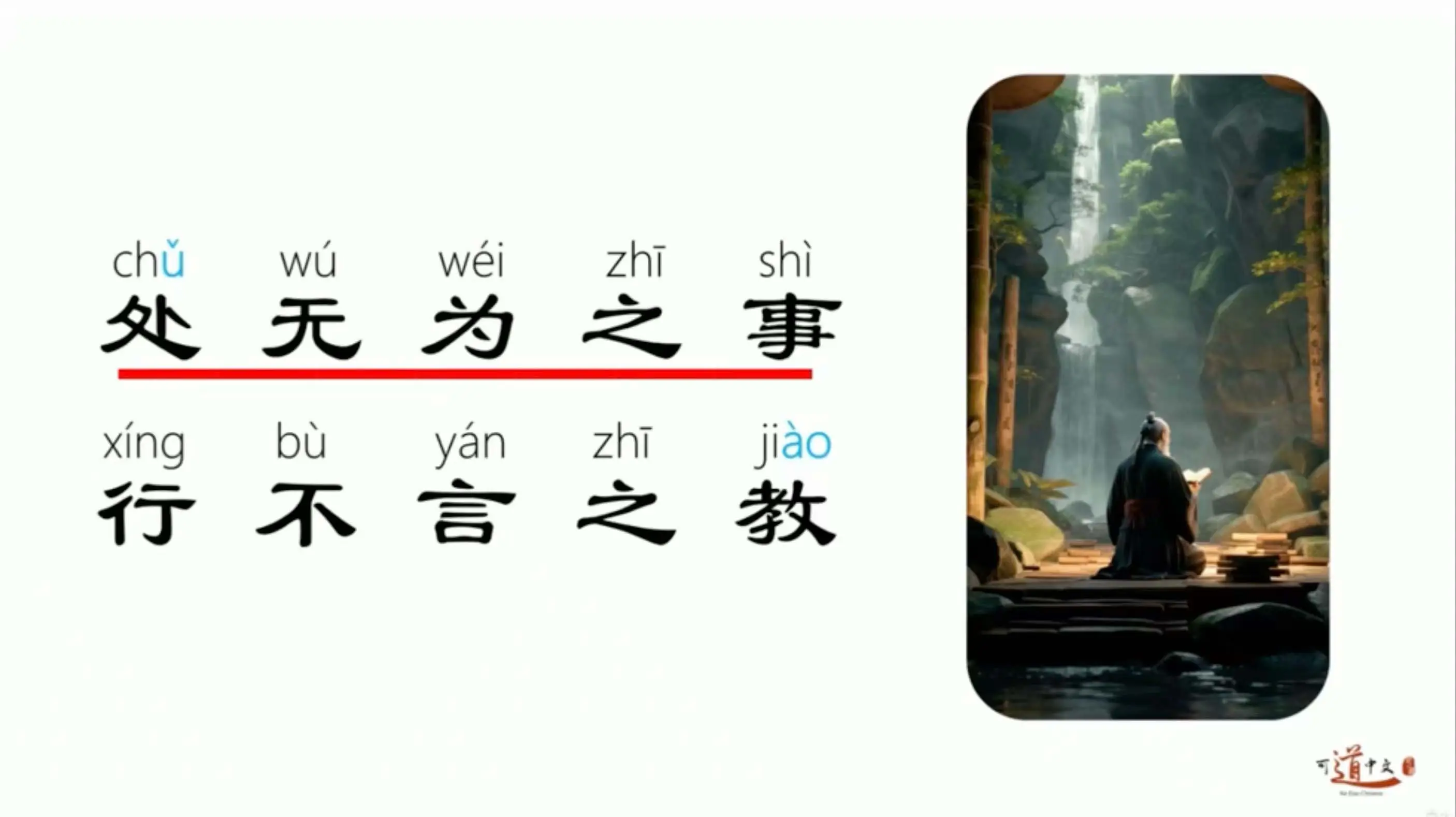
Laozi said, “吾言甚易知,甚易行。wú yán shèn yì zhī,shèn yì xíng” (“My teachings are very easy to understand and very easy to practice”). But this only holds true if you use the right method. With the right approach, even the deepest classics become simple and accessible.
So if you’re curious about the Dao De Jing—or Chinese culture in general—this course offers a classic way to engage with classics. Reciting the entire book with my videos takes just about two hours. With practice, you can speed up significantly. One professor at Beijing Language and Culture University recites the Dao De Jing daily in under 30 minutes!
One big obstacle in reciting the Dao De Jing
Some people—both Chinese and foreigners—use AI-generated Pinyin versions.
Don’t do it!
The text contains many polyphonic characters (多音字) where pronunciation changes meaning. AI often mislabels these. The more you practice with wrong Pinyin, the more mistakes you’ll internalize.
That’s why one of this course’s key contributions is the careful proofreading and annotation of these polyphonic characters.
A well-known debate about the Dao De Jing:
A highly advanced student once asked me, “Isn’t Confucianism the most important philosophy in China? Shouldn’t we start with Confucius?”
I laughed and said, “You’re not the first to ask that!”
There are a few reasons why you should start with the Dao De Jing
First, Daoists would certainly disagree with learning Confucius first. They would say, Confucius was actually a student of Laozi. So, shouldn’t we start with the teacher?
Second, even after Confucianism became dominant during the Han Dynasty, the Dao De Jing remained equally important among educated Chinese elites. There’s a saying: “Use Confucius when serving the state; use Daoism when reflecting inward.”
The third reason is very practical: The Dao De Jing is only about 5,000 characters. The Four Confucian Classics total nearly 60,000. Which one seems more manageable to recite?
What can beginners gain?
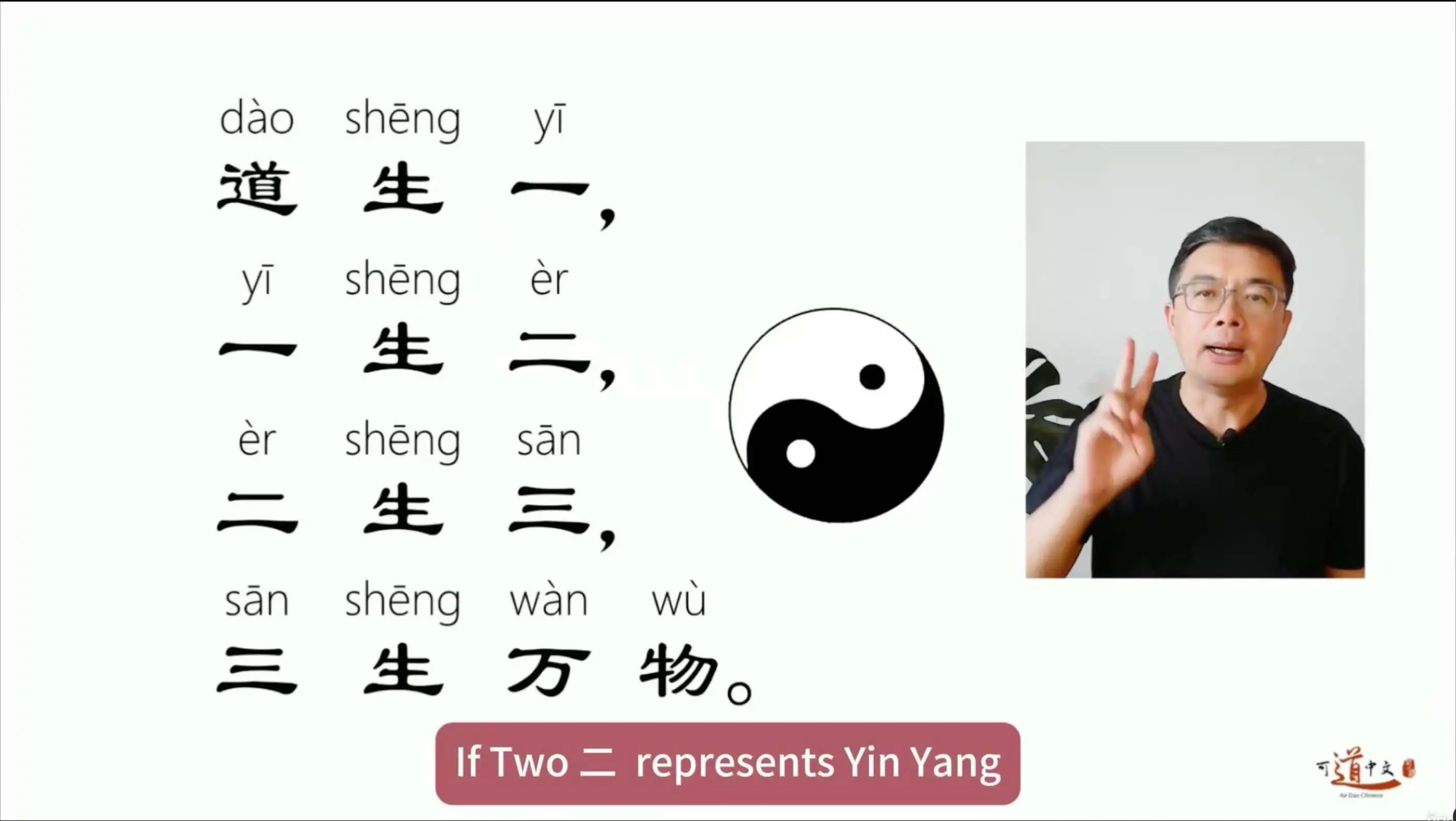
As mentioned, any Chinese learner can benefit. You’ll learn useful idioms, understand Chinese cultural mindset, improve pronunciation, tone, and rhythm—and gain huge confidence. If you can study the Dao De Jing, mastering Mandarin no longer seems so daunting!
How to find my course:
Go to Udemy and search “Dao De Jing” Make sure you search “Dao De Jing,” not “Tao Te Ching.”
Why?
I explain the reasons in the course.
You can also click here to go directly to the course page.
What’s next:
I’m planning to break down well-known proverbs, idioms and phrases from the Dao De Jing one by one—and show how to use them in real life. Impress your friends with sophisticated Chinese expressions borrowed from this ancient classic!